


Can Your Joints Actually Predict The Weather?
- Emily Brown
- Apr 3
- 4 min read

If you've felt like your body has been through the wringer this past month, you're not imagining it. This transition into spring has been anything but smooth. One day it's 75 and sunny, the next we're under a tornado warning with temperatures crashing 30 degrees overnight. False springs, cold snaps, storms rolling through back-to-back… it's a lot.
And if you've noticed your joints aching more, your energy tanking, or your head pounding right before the weather shifts, there's real science behind what you're feeling. Last week, during that tornado warning, I got hit with a migraine. So did nearly every migraine-prone person I know: friends, family, clients. It wasn't a coincidence.
Let's break down what's actually happening in your body when the weather can't make up its mind.
The Invisible Force: Barometric Pressure
Barometric pressure is the weight of the atmosphere pressing down on us. You can't see it or feel it directly, but your body absolutely responds to it, especially when it changes rapidly.
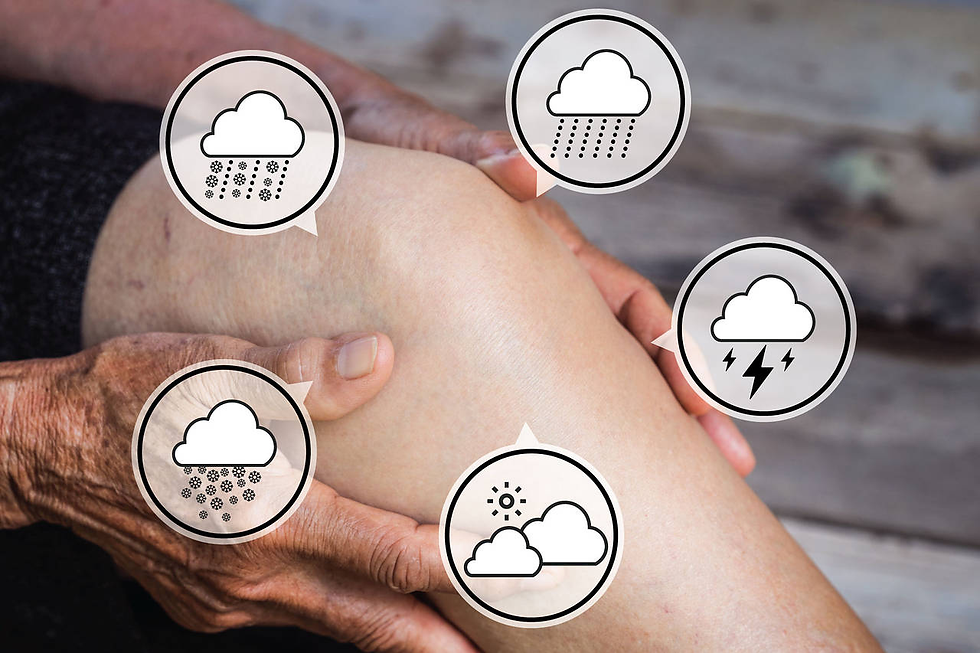
Here's the basic idea: When a storm approaches, barometric pressure drops. When pressure drops, the tissues in your body, including muscles, tendons, and joint capsules, can expand slightly. Think of it like a balloon with a little extra air added. For joints that are already inflamed, injured, or arthritic, that slight expansion puts pressure on nerve endings and ramps up pain signals.
Your joints actually have pressure sensors called baroreceptors that detect these shifts. So when people say their knees "predicted" the storm? They're not wrong.healthnewshub.org
The faster the pressure change, the worse the symptoms. A gradual shift over a few days is easier on the body than a 50-degree temperature swing in 24 hours, which is exactly what we've been dealing with.
Why Cold Weather Makes Everything Feel Stiffer
Synovial fluid thickens. This is the slippery, oily fluid that lubricates your joints. In cold weather, it becomes more viscous, like motor oil in winter, which means less smooth movement and more stiffness.popsci.com
Muscles tighten up. Your body contracts muscles to conserve heat. That extra tension pulls on joints, adding strain to areas that are already sensitive. healthnewshub.org
We move less. When it's cold or dreary, we tend to stay inside, sit more, and skip walks or workouts. Less movement means stiffer joints and more discomfort overall.

Migraines and Weather: The Connection Is Real
If you're prone to migraines, you've probably already identified certain triggers—stress, sleep changes, certain foods. But weather is one of the most common triggers, affecting more than one-third of people with chronic migraines. greatist.com
When barometric pressure drops before a storm, it can create an imbalance in your sinus cavities and affect pressure-sensitive structures in your brain. The result? That familiar throbbing, nausea, light sensitivity, and general misery.
Last week's tornado warning was a perfect storm (pun intended) for migraine sufferers:
Rapid pressure drop
High humidity
Temperature swings
The stress and anxiety of severe weather alerts
No wonder so many of us were reaching for the ice packs and dark rooms.
Seasonal transitions—especially spring and fall—are particularly rough because of the constant back-and-forth. Your body never quite gets a chance to adjust before the next front moves through. theweather.com

It's Not Just Arthritis
You don't need a diagnosis to feel the effects of weather changes. Here's who tends to notice it most:
Osteoarthritis: The loss of cartilage means bones and nerves are more exposed to pressure shifts. Weight-bearing joints like hips and knees take the biggest hit.
Rheumatoid arthritis: As an autoimmune condition, RA can flare with weather changes. Some research suggests the immune system itself may respond to atmospheric shifts.
Old injuries: That ankle you sprained ten years ago? It remembers every cold front.
Chronic pain conditions: Fibromyalgia, tension headaches, TMJ, all can be amplified by weather instability.
Anyone with inflammation: If something in your body is already irritated or swollen, pressure changes give it more room to press on nerves. teethfillingtechnique.com
What You Can Do About It
You can't control the weather, but you can control how you respond to it. Here are some practical strategies:
Stay Warm and Limber
Layer up, even indoors if you tend to run cold
Use heating pads on stiff joints and tight muscles
Take warm showers or baths to loosen up before starting your day
Keep Moving
Gentle stretching, yoga, or a short walk can prevent stiffness from setting in
Warm up before any exercise—cold muscles are more prone to strain
Don't let a gray day become an excuse to stay on the couch all day
Stay Hydrated
Dehydration makes everything worse—joint stiffness, headaches, fatigue
Humidity fluctuations can sneak up on you, so drink water even when you don't feel thirsty
Track Your Patterns
Notice when your symptoms flare and what the weather was doing
Apps that track barometric pressure can help you anticipate rough days
Knowing a storm is coming lets you prepare instead of getting blindsided
Support Your Body Proactively
If you know a pressure drop is coming, take it easier that day
Prioritize sleep—your body does its best repair work at rest
Consider scheduling a massage before or after a big weather shift to help your muscles recover



Comments